



Digimagaz.com – Samsung is preparing a major upgrade for its next generation of Galaxy foldable smartphones with the introduction of Flex Titanium, a newly engineered display technology designed to improve durability, reduce the appearance of the screen crease, and increase power efficiency.
The announcement signals Samsung’s continued investment in foldable smartphones as competition intensifies across the premium Android market. Rather than simply making foldable phones thinner, the company is focusing on solving two of the biggest concerns among consumers: long-term durability and the visibility of the fold.
Samsung Introduces Flex Titanium for Future Galaxy Foldables
Samsung Electronics revealed Flex Titanium as its latest display innovation developed after seven generations of Galaxy Fold and Galaxy Z Flip devices.
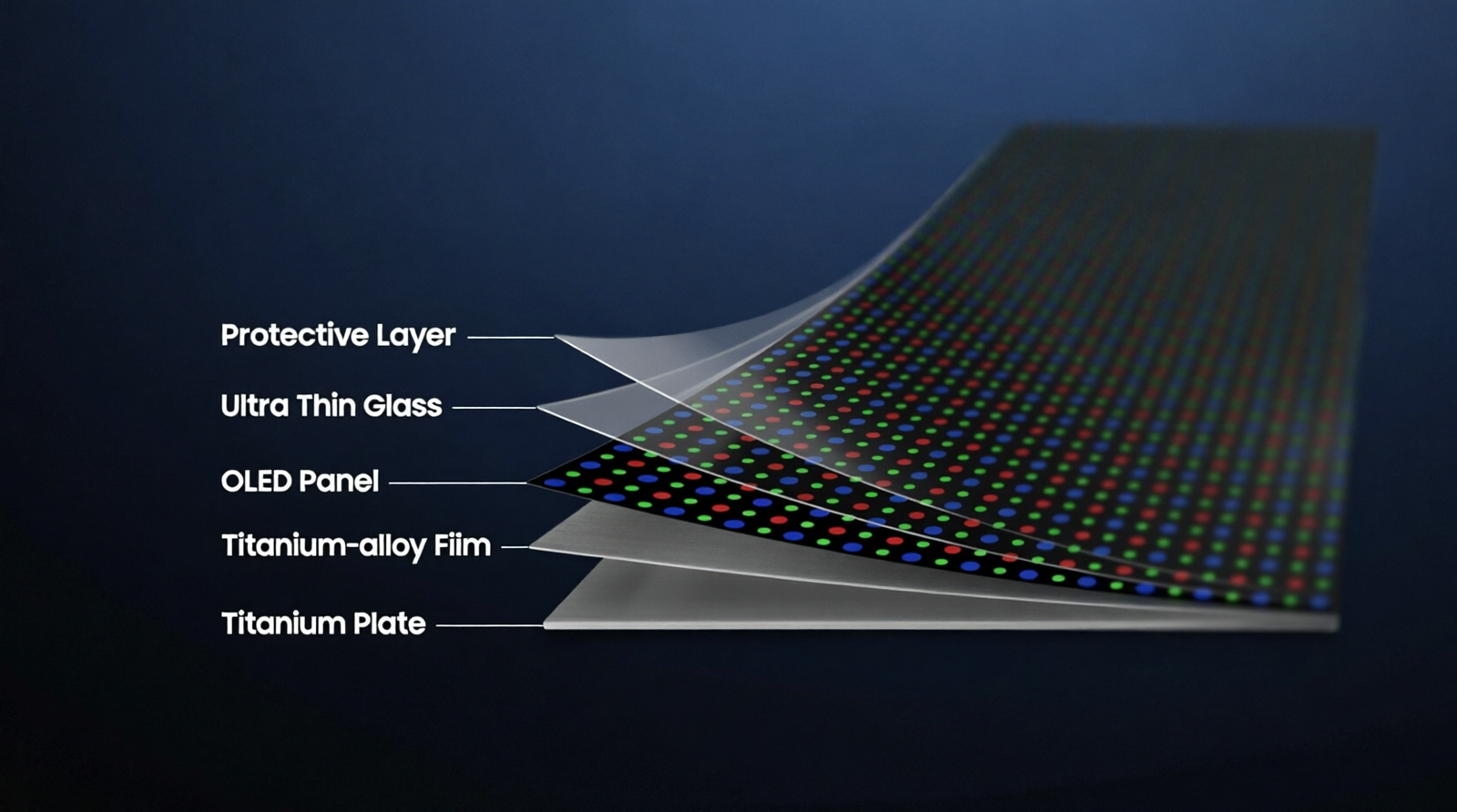
The technology combines two titanium-based components integrated directly into the foldable display structure:
- A titanium-alloy support film
- A precision-engineered titanium plate
Together, these components are designed to create a display that remains slim while becoming more resistant to repeated folding and everyday impacts.
Samsung says the new structure provides a smoother viewing experience by making the crease less noticeable without sacrificing portability.
Why Samsung Chose Titanium
Titanium has long been recognized for offering an excellent balance of strength and lightweight construction. It’s commonly used in aerospace equipment, satellites, and even Mars exploration vehicles because it can withstand demanding conditions.
Applying titanium inside a foldable smartphone, however, presents a significant engineering challenge.
Unlike traditional smartphone frames, a foldable display must bend thousands of times throughout its lifetime. The material needs to be rigid enough to protect the OLED panel while remaining flexible enough to survive repeated opening and closing.
Samsung’s engineers developed a solution by incorporating titanium into two different structural layers instead of relying on a single component.
Two Layers Working Together
The first innovation is a titanium-alloy film positioned beneath the OLED display.
According to Samsung, this layer delivers mechanical stiffness roughly 20 times greater than conventional polymer film while remaining exceptionally thin. The company says the material measures approximately one-third the thickness of an average human hair, allowing the display assembly to remain compact.
Supporting that layer is a newly developed titanium plate, which provides additional structural reinforcement.
Instead of leaving microscopic air gaps between the display and its support structure, Samsung created a precision hole-processing technique that allows stronger bonding throughout the display module.
The result is improved support when the device is fully opened while maintaining enough flexibility to handle continuous folding.
Reduced Crease Visibility
The screen crease has remained one of the most discussed aspects of foldable smartphones since the category first launched.
Although Samsung has gradually reduced crease visibility over several product generations, the company says Flex Titanium represents another meaningful step forward.
The redesigned display structure helps distribute mechanical stress more evenly across the folding area, allowing the screen to appear flatter when unfolded.
While Samsung has not yet provided numerical measurements regarding crease reduction, the company emphasizes that the new engineering focuses on delivering a more immersive viewing experience with fewer visual distractions.
Display Improvements Go Beyond Durability
Flex Titanium is not solely about making foldable phones tougher.
Samsung also paired the new structural design with an upgraded high-resolution display architecture and next-generation organic display materials.
According to the company, these improvements deliver:
- More vibrant image quality
- Improved display efficiency
- Lower overall power consumption
- Better battery optimization during everyday use
Increasing display efficiency is especially important for foldable smartphones, whose large internal screens typically consume more power than traditional smartphone displays.
Built on Seven Generations of Foldable Development
Samsung says Flex Titanium reflects years of customer feedback collected since launching its first Galaxy Fold device.
Over multiple product generations, users consistently requested:
- Larger immersive displays
- Less visible screen creases
- Better durability
- Slimmer devices
- Improved portability
Rather than addressing these requests individually, Samsung redesigned the internal display structure to improve multiple aspects simultaneously.
According to Sunghoon Moon, Executive Vice President of Samsung’s Mobile R&D Office, the company’s goal is to connect advanced engineering with real-world user benefits rather than introducing technology solely for marketing purposes.
What This Means for Future Galaxy Fold Devices
The introduction of Flex Titanium suggests Samsung is entering another phase of foldable smartphone evolution.
Early foldables primarily demonstrated that flexible displays were possible. More recent generations have focused on improving hinges, waterproofing, software optimization, and overall reliability.
Flex Titanium shifts attention toward refining the display itself by improving both structural integrity and everyday usability.
If Samsung’s claims translate into real-world performance, future Galaxy Fold devices could offer:
- Longer-lasting display durability
- A flatter viewing surface
- Better resistance to repeated folding
- Improved battery efficiency
- A more premium overall user experience
These upgrades may also help Samsung maintain its leadership position as more smartphone manufacturers expand their foldable portfolios.
Galaxy Unpacked Will Reveal More Details
Samsung has confirmed that Flex Titanium will make its commercial debut in the company’s next-generation Galaxy foldable smartphones.
Additional specifications, device features, and product details are expected to be announced during the upcoming Galaxy Unpacked event, where Samsung traditionally unveils its newest foldable flagship lineup.
For consumers considering a foldable phone, Flex Titanium could represent one of Samsung’s most significant hardware advancements in recent years, addressing longstanding concerns while pushing foldable display technology another step closer to becoming mainstream.