Table of contents:
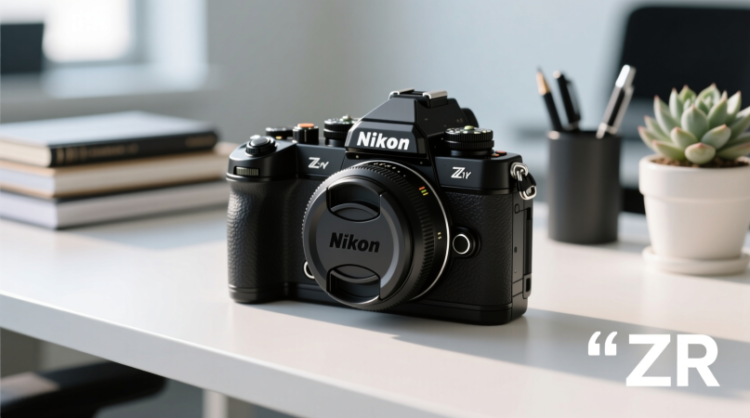
Digimagaz.com – Nikon’s first serious step into the cinema camera market arrives with a clear message: the company is not easing its way in. The new Nikon ZR blends Nikon’s mirrorless engineering with RED’s cinematic DNA, delivering a compact, weather-sealed camera that feels designed for modern filmmakers who value flexibility, speed, and price-conscious performance.
Rather than chasing traditional broadcast rigs, Nikon appears to be targeting a different kind of professional. The ZR is aimed squarely at creators who shoot run-and-gun projects, documentaries, branded content, and vertical video, while still demanding high-end image quality and color science that can integrate into established cinema workflows.
A Compact Body With Serious Video Ambitions
At first glance, the Nikon ZR stands out for how small it is. Weighing just 540 grams body-only, it undercuts most cinema cameras in both size and weight, yet still manages to include features typically reserved for far more expensive systems. Inside is a 24-megapixel partially stacked full-frame sensor borrowed from the Nikon Z6 III, paired with 5-axis in-body stabilization and subject-detection autofocus.
Video is where the ZR makes its strongest case. It records 6K footage at up to 60 frames per second internally, with 12-bit RAW support and up to nine selectable RED color profiles available in-camera. For creators who want flexibility without heavy post-production, 10-bit recording with baked-in color profiles offers a faster workflow with less storage overhead. High-frame-rate options extend to 4K at 120fps and Full HD at 240fps, making the ZR well suited for cinematic slow-motion work.
Audio Takes an Unusual Lead
One of the ZR’s most distinctive features is its approach to audio. Nikon claims a first for cinema cameras with internal 32-bit float audio recording, supported by a new triple-microphone array using Ozo audio technology. Filmmakers can choose from five directional pickup patterns, including binaural, without relying on external recorders.
This focus on audio is reinforced by the launch of Nikon’s ME-D10 shotgun microphone, designed specifically to take advantage of the ZR’s 32-bit float capabilities. For solo shooters and small crews, this could significantly simplify production setups, especially in unpredictable recording environments.
Designed for the Way Content Is Shot Today
The Nikon ZR reflects how filming habits have changed. While it lacks open-gate recording, it introduces automatic UI rotation and embedded metadata for vertical shooting. Hold the camera upright, and the interface adjusts instantly, with orientation data carried through to Nikon’s editing software. For creators producing content for social platforms alongside traditional projects, this feature alone could save time on every shoot.
The camera’s 4-inch vari-angle touchscreen is another standout. It is larger and brighter than displays found on many rival cinema cameras, reducing the need for an external monitor in compact setups. There is no electronic viewfinder, reinforcing the ZR’s role as a screen-first filmmaking tool.
Trade-Offs That Reveal the Target Audience
To reach its aggressive price point, Nikon made clear compromises. Connectivity is more enthusiast-level than professional, with a micro HDMI port instead of a full-size connector. There are no built-in mounting points, no grip, and no bundled accessories, meaning most users will want to invest in third-party rigs or cages. Nikon has partnered with SmallRig to address this, but these add-ons represent extra cost and setup time.
Dual proxy recording is also absent, which may disappoint teams working with faster turnaround workflows. Still, for many independent creators, these omissions are easier to accept given the camera’s core strengths.
Price and Positioning
At $2,199.95 in the US, £2,199.99 in the UK, and AU$3,499 in Australia, the Nikon ZR undercuts most comparable cinema cameras by a wide margin. Many rivals with similar specifications cost 50 percent more, and some nearly double. Sales are expected to begin in October 2025, with accessory bundles planned but not yet detailed.
This pricing positions the ZR as an attractive B-camera for professionals already using RED systems, thanks to seamless color matching, while also making it accessible as a primary camera for smaller studios and independent filmmakers.
A Promising Start for Nikon and RED
The Nikon ZR feels less like an experiment and more like a statement of intent. It combines high-end video formats, advanced audio recording, and thoughtful features for modern content creation into a body that is both compact and relatively affordable. While it does not replace fully rigged cinema systems, it was never meant to.
If Nikon expands this lineup with cinema-focused lenses and a higher-tier model offering more professional connectivity, the ZR may be remembered as the camera that marked Nikon’s true arrival in the filmmaking world. For now, it stands as one of the most compelling compact cinema cameras announced for 2025, and a strong indication that the Nikon and RED partnership is already paying off.