Digimagaz.com – Apple’s next flagship cycle may be less about flashy redesigns and more about structural change. Early reports suggest the iPhone 18 lineup could expand Apple’s SIM-free strategy beyond the United States, potentially introducing fully eSIM-only models across key European markets, pending regulatory approval.
If that shift materializes, it would not just remove a hardware component. It could alter how millions of users activate, switch, and manage mobile service.
From U.S. Experiment to European Expansion
Apple first eliminated the physical SIM tray in U.S. models of the iPhone 14, signaling confidence in eSIM technology. At the time, the move was framed as a forward-looking step toward a more digital, streamlined device architecture. Outside the U.S., however, Apple continued shipping dual-SIM variants that retained a physical tray alongside eSIM support.
Now, industry chatter indicates the iPhone 18 could extend the eSIM-only approach into Europe. Such a decision would require coordination with regional carriers and regulatory bodies, particularly in countries where physical SIM distribution remains standard practice.
For Apple, the transition is about more than minimalism. Removing the SIM tray frees up internal space and reduces mechanical complexity. That reclaimed volume, while small in isolation, becomes significant when engineers are balancing battery density, thermal management, and structural reinforcement inside increasingly compact chassis designs.
Why the SIM Tray Matters More Than It Seems
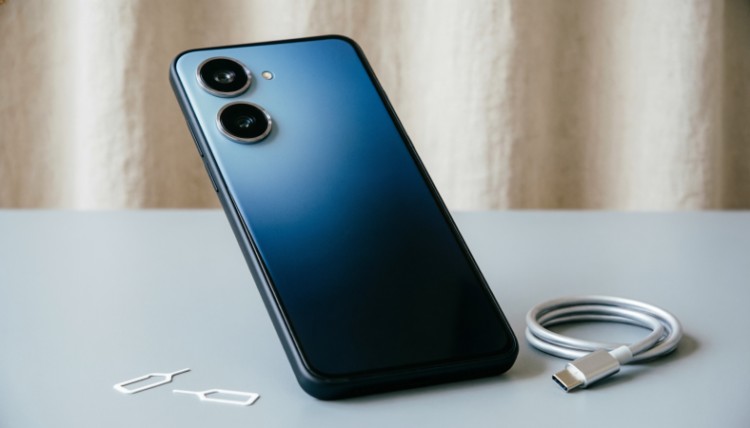
On paper, a SIM tray is a minor hardware element. In practice, it represents trade-offs. The tray requires internal housing, water-sealing components, and structural cutouts along the device frame. Eliminating it can simplify waterproofing and improve durability.
For the iPhone 18 Pro and Pro Max models, analysts speculate that the extra internal room could support larger battery cells without increasing overall thickness. In a market where battery life is often the deciding factor for upgrades, even modest gains in capacity can translate into hours of additional real-world usage.
There is also a manufacturing angle. Fewer physical components can streamline assembly lines and reduce failure points. Over time, this can improve production efficiency and long-term reliability metrics.
The Real Challenge: Carrier Infrastructure
The technical case for eSIM is straightforward. The user experience, however, depends heavily on carrier readiness.
While eSIM adoption has grown steadily across Europe, onboarding processes still vary widely between providers. Some carriers offer instant QR-code activation or in-app provisioning. Others require in-store verification or multi-step identity checks that complicate the process, particularly for users switching from Android devices.
Apple’s advantage lies in ecosystem integration. Its tight control over hardware and software allows for a guided activation flow inside iOS. If the iPhone 18 launch is paired with deeper carrier partnerships and standardized digital onboarding, Europe could see a faster normalization of eSIM-only devices.
For frequent travelers, the change may actually simplify connectivity. eSIM allows users to store multiple profiles and switch plans digitally without swapping physical cards. In regions where cross-border travel is common, that flexibility could become a meaningful selling point.
Pricing Stability Despite Supply Pressures
Early projections suggest Apple will attempt to maintain pricing continuity for its Pro-tier devices. Industry expectations place the iPhone 18 Pro around $1,099 and the Pro Max near $1,199 in the U.S., assuming current cost structures hold.
This outlook comes despite ongoing global memory supply constraints. Apple’s long-term supplier agreements, including relationships with major component manufacturers, are expected to help offset volatility in NAND and DRAM pricing. Maintaining price stability would be critical as consumers grow more cautious about premium smartphone spending.
Foldables and AI: A Broader Strategy
Beyond connectivity changes, speculation continues around Apple’s longer-term roadmap. Industry observers believe the company is accelerating innovation cycles through 2027, potentially including a foldable iPhone variant.
Artificial intelligence integration is also expected to deepen across upcoming generations. While details remain limited, analysts anticipate more on-device AI processing, advanced contextual awareness, and tighter cross-device intelligence within Apple’s ecosystem.
If the iPhone 18 becomes Europe’s first fully eSIM-only iPhone generation, it could mark a structural turning point rather than a cosmetic one. Removing the SIM tray would symbolize Apple’s broader direction: fewer physical constraints, more software-driven control, and tighter integration between hardware, networks, and services.
In that sense, the iPhone 18 may not just introduce a new model year. It could redefine how smartphones connect to the world.