
Table of contents:
- A cautious but deliberate launch timeline
- A wider design focused on usability
- Thin engineering with tablet ambitions
- A serious push toward a crease-free display
- Dual displays for distinct use cases
- Liquidmetal hinge as a durability statement
- Cameras that prioritize the main display
- Premium pricing for a new flagship tier
- Why the iPhone Fold matters
Digimagaz.com – Apple is widely expected to enter the foldable smartphone market with the long-rumored iPhone Fold, a device that could arrive as early as fall 2026. While competitors like Samsung and Google have already established their presence in the category, Apple appears to be taking a slower, more deliberate approach. That patience may signal that the iPhone Fold is less about following trends and more about redefining what a foldable phone should be.
Rather than positioning the iPhone Fold as a novelty, Apple is expected to treat it as a new flagship tier, one that blends the portability of an iPhone with the productivity and screen real estate of a small tablet.
A cautious but deliberate launch timeline
Rumors surrounding a foldable iPhone date back nearly a decade, but recent reports suggest Apple has finally locked onto a realistic window. Most industry watchers now point to late 2026 as the target, aligning the iPhone Fold with Apple’s traditional fall product cycle.
That said, Apple’s history suggests the company will not ship until it is confident in durability and long-term user experience. Persistent reports of hinge refinements and display testing indicate that a slip into 2027 remains possible if engineering standards are not met.
A wider design focused on usability
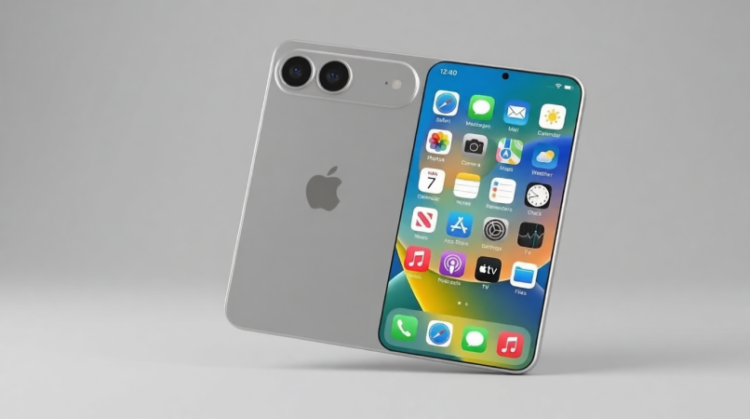
Unlike many foldables that prioritize tall, narrow external displays, Apple is reportedly aiming for a wider, more balanced form factor. When unfolded, the internal display is expected to approach iPad mini territory, with a screen size just under eight inches and an aspect ratio closer to a tablet than a stretched phone.
This design choice suggests Apple wants the unfolded experience to feel genuinely useful for reading, multitasking, and media consumption, rather than simply larger. When folded, the device may appear squarer than current iPhones, but that trade-off could improve comfort and typing usability.
Thin engineering with tablet ambitions
Foldables live or die by thickness, and Apple seems keenly aware of this. Reports indicate the iPhone Fold could be impressively thin when opened, comparable to Apple’s latest ultra-thin tablets. Even when folded, the overall thickness is expected to remain competitive with existing foldable phones.
Achieving this likely requires internal compromises, from battery layout to component placement. Apple’s rumored use of a camera plateau structure may help redistribute internal hardware while keeping the main body slim.
A serious push toward a crease-free display
One of the biggest criticisms of foldable phones remains the visible crease that forms over time. Apple has reportedly invested years into solving this problem, working with multiple display partners before settling on a Samsung Display solution that minimizes long-term wear.
The approach combines rigid glass elements with flexible substrates, designed to better distribute stress during folding. While no foldable screen is truly immune to fatigue, Apple’s goal appears to be making the crease far less noticeable during everyday use, both visually and to the touch.
Dual displays for distinct use cases
The iPhone Fold is expected to feature two screens: a large internal folding display and a more traditional external screen for quick tasks. This allows users to interact with the device like a standard iPhone when closed, without constantly unfolding it.
The outer display is rumored to offer pixel density on par with current iPhones, reinforcing the idea that Apple does not want the folded experience to feel like a compromise. Instead, unfolding becomes a deliberate choice for moments when a larger canvas adds real value.
Liquidmetal hinge as a durability statement
At the center of the design is the hinge, an area where many foldables struggle over time. Apple is rumored to use Liquidmetal, a material known for its strength and resistance to deformation. If true, this would be a notable step up from traditional hinge materials and could significantly improve long-term durability.
A stronger hinge also supports Apple’s emphasis on precision alignment, which is critical for reducing display stress and maintaining a consistent folding motion.
Cameras that prioritize the main display
Camera hardware on the iPhone Fold is expected to mirror Apple’s current flagship philosophy, but with some strategic differences. Dual rear cameras, likely featuring a main and ultra-wide sensor, should cover most everyday photography needs.
More interesting is the internal display, where Apple is rumored to use an under-display camera. This would allow the main screen to remain completely uninterrupted, with no notch or Dynamic Island. The external display, by contrast, is expected to use a more conventional punch-hole camera for FaceTime and quick selfies.
Premium pricing for a new flagship tier
No matter how it is positioned, the iPhone Fold will not be inexpensive. Current estimates suggest a starting price above $2,000, placing it well above standard iPhone models and even some Mac desktops.
This pricing reinforces the idea that the iPhone Fold is not meant to replace the mainstream iPhone. Instead, it is likely aimed at power users, early adopters, and professionals who want a single device that can comfortably bridge phone and tablet use.
Why the iPhone Fold matters
Apple’s entry into the foldable market is less about catching up and more about legitimizing the category for a broader audience. If the company succeeds in delivering a durable hinge, a refined display, and meaningful software optimization, the iPhone Fold could shift perceptions of foldables from experimental to essential.
While many details remain unconfirmed, one thing is clear: Apple’s first foldable iPhone is shaping up to be a statement product, not just another variation. If it launches as expected, the iPhone Fold could mark the most significant change to the iPhone’s form factor since the original model debuted.