Digital Magazine – Applications are no longer just part of the business they are the business. From customer-facing platforms to internal workflows, nearly every digital interaction depends on web apps, APIs, or mobile interfaces. That central role has turned applications into prime targets for attackers, making application security (AppSec) one of the most critical frontiers in cybersecurity today.
As modern software grows increasingly complex built on microservices, third-party dependencies, and AI-driven functionality traditional security methods often fail to keep pace. Manual code reviews and static scans can’t match the speed of continuous delivery pipelines or the sophistication of modern attacks. This gap has opened the door for AI-powered AppSec solutions, which bring automation, adaptability, and predictive intelligence into an industry long reliant on reactive defense.
Why AI is Transforming Application Security
Unlike traditional approaches, AI-powered security tools don’t just identify vulnerabilities—they learn from them. Trained on massive datasets of real-world exploits, AI models can recognize hidden risks, adapt to new attack patterns, and even generate remediation strategies tailored to specific environments. For organizations, this means fewer false positives, faster response times, and stronger alignment with compliance requirements.
Key advantages include:
-
Proactive detection through continuous monitoring and anomaly recognition.
-
Automated remediation with code-level suggestions and fix recommendations.
-
Contextual risk prioritization that aligns security with business impact.
-
Seamless DevOps integration, embedding security into the software development lifecycle without slowing delivery.
Best Practices for Implementing AI in AppSec
Organizations adopting AI-driven security should avoid treating it as a silver bullet. Experts recommend combining automation with human expertise, ensuring that AI augments rather than replaces skilled security professionals. Best practices include:
-
Shift security left: Integrate AI early in the software development lifecycle (SDLC).
-
Combine multiple approaches: Use AI alongside static (SAST), dynamic (DAST), and manual reviews.
-
Enable continuous learning: Choose tools that adapt based on threat intelligence and user feedback.
-
Map findings to compliance frameworks: Ensure results align with GDPR, HIPAA, or SOC 2 standards.
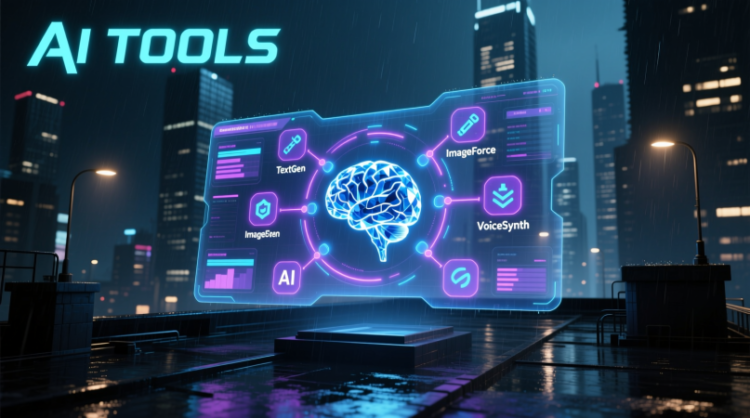
The Five Leading AI-Powered AppSec Tools of 2025
1. Apiiro
Apiiro goes beyond legacy scanning by providing risk intelligence across the software supply chain. Its AI engine contextualizes vulnerabilities based on developer actions, cloud configurations, and business priorities, allowing security teams to remediate what matters most.
2. Mend.io
Built for the hybrid era of human- and AI-generated code, Mend.io delivers end-to-end security for source code, open-source libraries, containers, and AI models. Its strength lies in automated remediation, helping organizations reduce both engineering workload and business exposure.
3. Burp Suite (AI-Enhanced)
Already a trusted name in penetration testing, Burp Suite now incorporates machine learning to enhance dynamic scanning. Its AI modules learn from live traffic, uncovering vulnerabilities in dynamic or API-heavy environments where traditional tools often fall short.
4. PentestGPT
PentestGPT leverages generative AI to mimic real-world adversaries. Rather than relying on pre-set patterns, it develops creative attack strategies, generates payloads, and even guides testers through complex scenarios—blurring the line between offensive automation and analyst training.
5. Garak
Garak is one of the first platforms built specifically for AI security, addressing threats like prompt injection, data leakage, and adversarial manipulation in large language models. As enterprises embed AI into business logic and customer interactions, Garak fills a critical new security gap.
Building Resilient Software in the AI Era
AI-powered application security is not just an add-on it’s becoming the backbone of resilient software development. In 2025, the strongest defenders are those who combine machine intelligence with human expertise, ensuring security evolves as quickly as innovation itself.
From intelligent vulnerability detection to the defense of AI-driven applications, these tools are reshaping digital trust at enterprise scale. For organizations aiming to stay secure in an AI-first world, investing in adaptive AppSec solutions is no longer optionalit’s essential.