
Table of contents:
Digimagaz.com – For PC gamers already grappling with rising hardware costs, 2026 may bring even tougher decisions. New industry chatter suggests that both AMD and NVIDIA are preparing for sustained graphics card price increases, a move that reflects deeper structural changes in the global semiconductor market rather than short-term supply hiccups.
According to reports originating from South Korea, GPU pricing pressure is expected to intensify beginning early next year. AMD is reportedly planning initial price adjustments as soon as January 2026, with NVIDIA expected to follow in February. Unlike previous cycles where prices eventually corrected, these increases are described as gradual and permanent, signaling a new baseline for high-performance graphics hardware.
Memory Becomes the Dominant Cost Driver
One of the most significant forces behind the looming price hikes is the escalating cost of memory. Industry estimates indicate that memory now accounts for as much as 80 percent of the bill of materials for modern GPUs. With DRAM prices projected to rise by up to 40 percent by the second quarter of 2026, manufacturers are left with little room to absorb costs internally.
The shift to DDR5, combined with soaring demand for high-bandwidth memory used in AI workloads, has created a supply environment that increasingly favors data centers over consumer gaming products. GPU vendors, in turn, are prioritizing margins and enterprise contracts, leaving gaming-focused products more exposed to cost inflation.
High-End GPUs Face the Steepest Increases
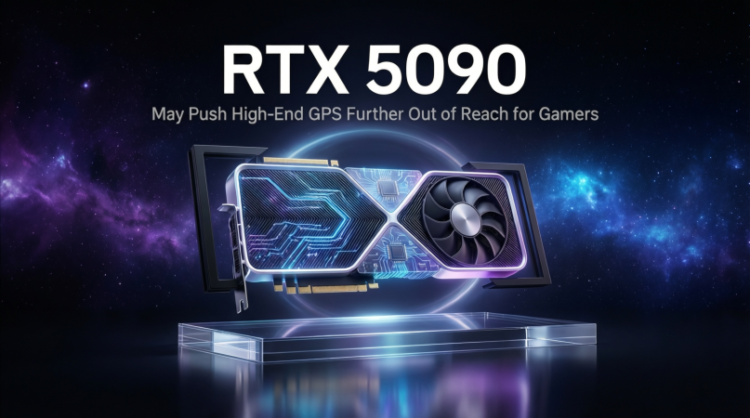
While no official pricing has been confirmed, leaked projections paint a stark picture at the top end of the market. NVIDIA’s flagship RTX 5090, which debuted at a retail price of $1,999, could reportedly reach figures well beyond mainstream affordability before the end of 2026. If such projections materialize, the flagship GPU segment may become inaccessible to most consumers outside professional or enterprise use cases.
AMD’s upcoming RX 9000 series has not yet been associated with specific price targets, but it is unlikely to be immune. Even traditionally value-oriented product lines are being pulled upward by component costs, manufacturing constraints, and competitive pricing dynamics across the industry.
Ripple Effects Across the Hardware Ecosystem
The implications extend far beyond graphics cards. DRAM market volatility has already raised concerns about delayed product launches across multiple categories, including next-generation consoles and laptops. Hardware vendors are adjusting strategies in response. ASUS, for example, has announced price increases across select product lines starting in early January 2026, despite expanding DDR4 motherboard production as a cost-mitigation effort.
This dual-track approach underscores a broader industry reality. Legacy components may see short-term relief, but the future of performance computing is increasingly tied to newer, more expensive technologies that are harder to scale affordably.
A Market Redefined by AI Priorities
Perhaps the most important takeaway for gamers is that these trends are not driven by gaming demand alone. AI acceleration, cloud computing, and enterprise workloads now exert greater influence over GPU development and pricing than consumer gaming. As long as AI-capable hardware commands premium margins, manufacturers have little incentive to aggressively pursue lower prices for enthusiast GPUs.
For consumers, this may accelerate shifts toward mid-range hardware, longer upgrade cycles, and greater interest in alternative platforms such as cloud gaming. It also raises questions about how sustainable the traditional PC gaming upgrade model will be if flagship components continue moving out of reach.
Looking Ahead
While official confirmations from AMD and NVIDIA remain absent, the signals emerging from supply chains and component markets point in the same direction. GPU prices in 2026 are unlikely to stabilize, let alone fall. Instead, gamers may need to recalibrate expectations as performance gains increasingly come with enterprise-level price tags.
In an industry once defined by rapid improvement at accessible prices, the next phase appears shaped by scarcity, specialization, and a global competition for silicon that no longer centers on gaming alone.