Table of contents:
Digimagaz.com – Sony’s PlayStation Portal has long occupied an unusual space in the gaming market. Originally positioned as a Remote Play accessory for the PlayStation 5, the device was limited by its dependence on an existing console. With Sony’s cloud streaming feature now officially out of beta, that dynamic has changed. The Portal can stream games directly from Sony’s servers, removing the requirement to own a PS5 or PS5 Pro.
While the Portal still relies entirely on an internet connection and does not run games locally, this update moves it closer to functioning as a standalone device. It is not a traditional handheld console, but it now serves as an independent gateway into the PlayStation ecosystem.
A Lower Barrier to Entry for PlayStation Gaming
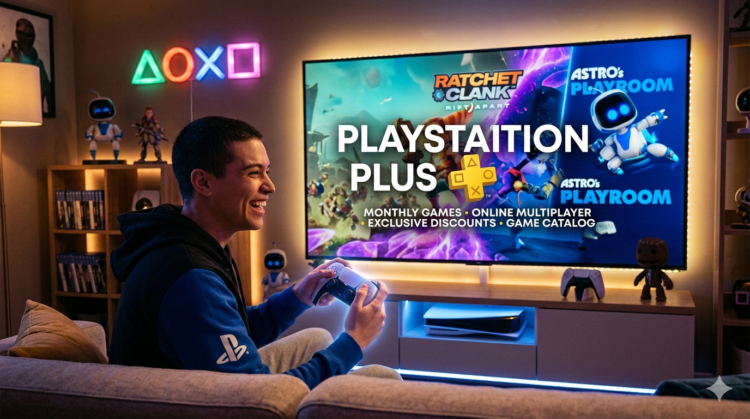
At $199.99, and occasionally less during ongoing sales, the PlayStation Portal is now one of the most affordable ways to access PlayStation 5 games. When combined with a PlayStation Plus Premium subscription, which enables cloud streaming, the total cost of entry is lower than purchasing a full console setup.
For players who share living spaces or do not want to dedicate a television to gaming, the Portal offers a practical alternative. This convenience mirrors the appeal that made handheld play popular with devices like the Nintendo Switch. In real-world use, Portal owners are reporting similar benefits, particularly in households where screen availability is limited.
Cloud Streaming Remains the Portal’s Biggest Limitation
Despite its increased flexibility, the PlayStation Portal is still defined by its reliance on cloud streaming. Sony lists 15 Mbps as the minimum required internet speed, but many users report that a significantly faster and more stable connection is necessary for consistent performance.
Unlike traditional handheld consoles, the Portal offers no local gaming option if the connection degrades. This makes the experience heavily dependent on network quality, which can vary widely by region and household. For some users, that limitation alone will outweigh the convenience the device provides.
How the Portal Compares to Sony’s Past Handhelds
The Portal’s design inevitably invites comparison to Sony’s earlier handheld consoles. The PlayStation Portable and PlayStation Vita were fully standalone systems that supported local gameplay alongside optional console streaming. In contrast, the Portal is entirely streaming-based, which can feel like a step backward rather than a natural evolution.
The long gap since the Vita’s release only amplifies that perception. More than a decade has passed without a true PlayStation handheld, and the Portal does not fully fill that void. Instead, it feels like a modern accessory built around infrastructure rather than hardware ambition.
Why Many Players Still Look to the Steam Deck
For players seeking a more complete handheld PlayStation experience, devices like the Steam Deck and Steam Deck OLED have emerged as unexpected alternatives. Through third-party tools such as Chiaki or official Remote Play apps, the Steam Deck can stream PlayStation games with features like HDR support.
Beyond streaming, the growing number of PlayStation titles officially released on PC run natively on Steam Deck hardware. Combined with broader support for emulation across multiple PlayStation generations, these handheld gaming PCs offer a level of flexibility the Portal cannot match.
A Step Forward, but Not the Handheld Many Are Waiting For
Sony’s improvements to the PlayStation Portal are meaningful. Removing the PS5 requirement expands its audience and makes the device easier to recommend to casual or curious players. It also signals that Sony is willing to evolve the product beyond its original constraints.
However, the Portal still feels like a compromise rather than a long-term solution. Its reliance on constant connectivity places a clear limit on its appeal, especially as handheld gaming PCs continue to grow more powerful and self-sufficient.
Rumors of a future PlayStation handheld tied to the next console generation remain compelling for this reason. Until such a device materializes, the PlayStation Portal stands as a useful but incomplete answer to a question Sony has yet to fully address.