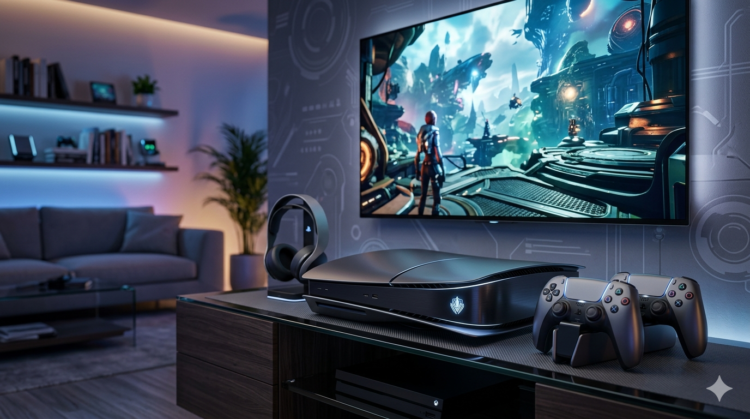
Digimagaz.com – Sony appears to be rethinking its long-term console strategy, with new reports suggesting the company is accelerating development of the PlayStation 6 for a potential 2027 debut. But beyond the timeline, the bigger story is how Sony may be reshaping its ecosystem—prioritizing affordability, artificial intelligence, and portable gaming in ways that could redefine the next console cycle.
A Multi-Device Ecosystem, Not Just a Console
Unlike previous generations that revolved around a single flagship system, Sony is reportedly exploring a broader lineup. Leaks point to three distinct devices: a standard PS6 console, a more affordable “Lite” variant, and a fully capable handheld system.
This approach suggests Sony is taking cues from evolving player habits. Gaming is no longer confined to the living room, and competitors like Nintendo and Valve have already demonstrated the demand for hybrid and portable experiences through devices like the Nintendo Switch and Steam Deck.
By offering multiple price points and form factors, Sony could lower the barrier to entry while expanding its reach across different types of players—from casual users to high-end enthusiasts.
A Return to Native Handheld Gaming
One of the most notable developments is Sony’s reported return to native handheld gaming. Unlike the PlayStation Portal, which relies on streaming, this new device is expected to run games locally.
That distinction matters. Sony’s last true handheld, the PlayStation Vita, built a loyal following but ultimately struggled due to limited third-party support and market timing. A modern successor, powered by next-generation hardware and integrated into a broader ecosystem, could address those past shortcomings.
If executed well, this handheld could compete directly with both the rumored Switch successor and PC-based portable systems, especially if it delivers console-level performance on the go.
AI Becomes the Core of the Experience
Perhaps the most forward-looking aspect of Sony’s strategy is its investment in AI-driven graphics and performance. The company is reportedly developing advanced upscaling technology—referred to as PSSR 3—to enhance image quality in real time.
This positions Sony against technologies like DLSS from Nvidia, which has become a benchmark in the PC gaming space.
The implication is clear: raw hardware power may no longer be the only metric that matters. Instead, intelligent rendering techniques could allow lower-cost devices to deliver high-end visual experiences, helping Sony achieve its apparent goal of reducing hardware costs without sacrificing performance.
Hardware That Balances Power and Efficiency
Early technical details suggest a careful balance between performance and energy efficiency. The handheld device, for example, is rumored to use advanced chip architecture built on cutting-edge manufacturing processes, enabling strong graphics capabilities while maintaining battery life.
This is critical in today’s market. Players expect portability without compromise, and any successful handheld must deliver consistent performance across demanding modern titles.
At the same time, the flagship PS6 console is expected to push graphical boundaries further, especially in ray tracing and path tracing—areas where Sony has been steadily investing since the PlayStation 5 generation.
Backward Compatibility as a Strategic Advantage
Another key pillar of Sony’s next-gen vision is backward compatibility. Ensuring that existing game libraries carry forward is no longer just a convenience—it is a competitive necessity.
By preserving access to older titles, Sony strengthens its ecosystem and reduces friction for users considering an upgrade. This also aligns with broader industry trends, where digital libraries and long-term user investment play a major role in platform loyalty.
Pricing Strategy: Expanding the Market
Perhaps the most intriguing aspect is pricing. Reports suggest a wide range—from mid-tier pricing for the Lite version to premium pricing for the full console.
This tiered approach could allow Sony to compete across multiple segments simultaneously. More importantly, it reflects a shift in philosophy: instead of pushing a single premium device, Sony may be aiming to scale its ecosystem by making entry more accessible.
Challenges That Could Shape the Outcome
Despite the ambitious vision, several external factors could still influence Sony’s plans. Global supply chain instability, semiconductor costs, and economic conditions remain unpredictable.
Historically, console launches have been subject to delays and revisions, and the PS6 is unlikely to be an exception. Even so, the direction Sony is taking offers insight into how the company views the future of gaming.
A Defining Moment for the Next Console Generation
If these reports prove accurate, Sony is not just preparing a new console—it is preparing a new strategy. By combining AI-driven performance, a renewed focus on handheld gaming, and a more inclusive pricing model, the company is positioning itself for a broader and more flexible gaming ecosystem.
The next few years will determine whether this approach can deliver on its promise. But one thing is already clear: the transition from PlayStation 5 to PS6 may mark one of the most significant shifts in Sony’s gaming philosophy to date.