Table of contents:
Digimagaz.com – When Mario & Sonic at the Olympic Games debuted, it marked a rare moment in video game history. Two characters who once symbolized fierce competition between Nintendo and SEGA were suddenly sharing the same screen. For fans, the crossover represented reconciliation after decades of rivalry. For the companies involved, however, the partnership came with careful rules and unspoken hierarchies.
A Former SEGA Producer Reveals a Small but Telling Detail
Ryoichi Hasegawa, a former SEGA producer, recently shed light on one of those rules during an interview with the Arcade Attack Retro Gaming Network. While discussing the development process, Hasegawa recalled how closely Nintendo monitored Mario’s presentation, even in the smallest visual details.
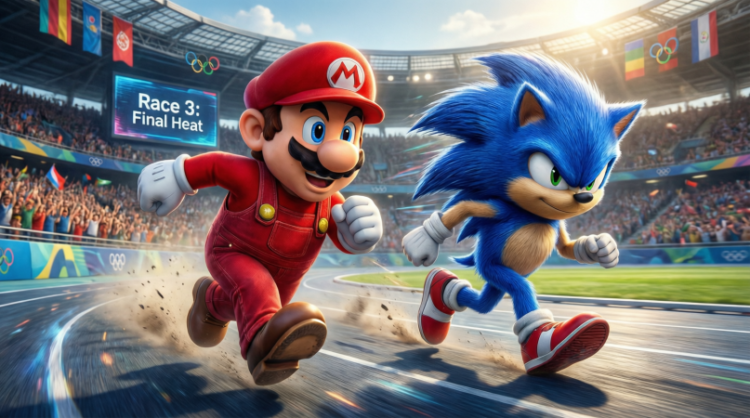
According to him, Nintendo insisted that Mario must always appear slightly ahead of Sonic in official artwork. This was not a design preference, but a firm requirement tied to brand positioning.
When Foot Placement Nearly Derailed the Deal
The issue came to a head when promotional artwork showed Sonic’s foot placed in front of Mario’s. The image was not obscure. It was used across multiple materials, including the game’s packaging, instruction manual, and cartridge label.
Nintendo reportedly demanded that the artwork be corrected immediately. Hasegawa recalled that the message was clear. Without the change, the collaboration itself could be at risk. SEGA revised the image, and the project moved forward, but the moment highlighted how high the stakes were behind the scenes.
What the Incident Says About Brand Power
On the surface, the correction may seem insignificant. In reality, it reflected Nintendo’s long standing approach to protecting Mario as a global brand. Mario is not just a character but a corporate symbol tied to decades of commercial success. Even in a shared franchise, Nintendo was unwilling to allow any visual implication that placed Mario second.
For SEGA, agreeing to such conditions was part of the compromise required to make the crossover possible. The partnership may have looked equal to players, but the internal dynamics told a more nuanced story.
The Rise and Quiet End of the Olympic Series
First released in 2007, Mario & Sonic at the Olympic Games became a recurring franchise tied to real world Olympic events. Over multiple entries, it served as a reminder of how the industry had evolved since the console wars of the 1990s.
Despite consistent releases for more than a decade, the series now appears to be over. No new titles have been announced, and momentum around the franchise has slowed significantly.
Ambitious Plans That Never Became Reality
Hasegawa also revealed that SEGA once considered expanding the series far beyond its usual scope. Early ideas for the 2020 installment reportedly included a massive crossover featuring characters from franchises such as The Legend of Zelda and Dragon Ball. Those concepts were ultimately shelved, likely due to licensing complexity and creative constraints.
A Behind the Scenes Look at Gaming Collaborations
The story of Mario’s foot placement offers a rare glimpse into how major gaming partnerships are managed. While players see polished characters and friendly competition, developers navigate strict guidelines shaped by brand legacy and corporate identity.
As the Mario & Sonic series fades into history, these behind the scenes details add depth to a crossover that once seemed unthinkable. They also serve as a reminder that in gaming, even the smallest visual choices can carry decades of meaning.