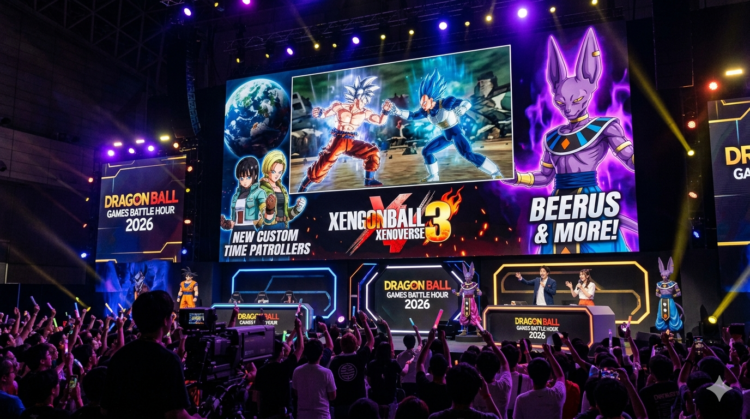




Digimagaz.com – The latest Dragon Ball Games Battle Hour 2026 delivered more than just fan service. While the annual showcase has long been known for tournament play and flashy reveals, this year’s event signaled something deeper: a coordinated push to expand the Dragon Ball universe across timelines, platforms, and formats.
From new anime adaptations to major game announcements, the weekend presentation offered a roadmap that blends nostalgia with forward-looking storytelling.
A New Anime Direction Begins to Take Shape
Among the early highlights was confirmation of Dragon Ball Super: The Galactic Patrol, which will revisit key arcs from the Dragon Ball Super timeline. While details remain limited, its focus on the Universe Survival and Galactic Patrol Prisoner storylines suggests a deliberate effort to bring previously explored manga content into a more accessible animated format.
The bigger headline, however, came with Dragon Ball Super: Beerus. This reimagining of the Battle of Gods arc is not just a retelling. Early footage showcased a noticeable upgrade in animation quality, hinting at modern production techniques designed to appeal to both longtime fans and newer audiences. With a Japanese release slated for fall 2026, the project appears positioned as a cornerstone of the franchise’s next phase.
Xenoverse 3 Signals a Bold Leap Into the Future
Perhaps the most significant announcement was Dragon Ball Xenoverse 3, confirming long-standing speculation about the mysterious “Age 1000” project.
Unlike previous entries, this installment moves the timeline forward, introducing a futuristic setting shaped in part by late series creator Akira Toriyama. His involvement in early character and world design adds a layer of authenticity, particularly with the introduction of new characters like Brett and an older version of Bulma.
Developed by Dimps, the game will maintain the online-focused structure that defined its predecessors, but its futuristic narrative direction could mark a meaningful evolution for the series. A 2027 release across PC, PlayStation 5, and Xbox Series X positions it as a long-term flagship title.
Ongoing Support Shows No Signs of Slowing
Even with a sequel on the horizon, Dragon Ball Xenoverse 2 continues to receive support. The upcoming Future Saga Chapter 4 DLC, expected this summer, will serve as the game’s final expansion—effectively closing a chapter that has spanned nearly a decade.
Meanwhile, Dragon Ball Sparking! Zero is doubling down on post-launch content. The Super Limit-Breaking Neo DLC introduces new fighters, stages, and gameplay modes, reinforcing Bandai Namco’s strategy of extending game lifecycles through continuous updates rather than rapid sequels.
A Growing Ecosystem Across Platforms
Mobile and card-based experiences were not left out. Titles like Dragon Ball Z Dokkan Battle and Dragon Ball Legends are set to receive crossover content tied to Xenoverse 2, strengthening connections between different segments of the franchise.
On the physical side, the Dragon Ball Super Card Game: Fusion World continues to expand with new booster sets rolling out throughout 2026. This steady release cadence highlights how Bandai Namco is maintaining engagement beyond digital platforms.
Competitive play is also gaining traction, with Dragon Ball Gekishin Squadra preparing to host its first world championship tournament—an indication that Dragon Ball’s esports ambitions are still evolving.
FighterZ Still Has One More Punch
Even veteran titles are staying relevant. Dragon Ball FighterZ will add a new fighter, Goku (SS4, Diama), on April 22. While it may not be a headline-grabbing reveal, it underscores the enduring popularity of a game released years ago.
The Bigger Picture: Building a Connected Dragon Ball Universe
What stands out most from this year’s event is not any single announcement, but the strategy behind them. Rather than focusing on isolated releases, Bandai Namco is building a connected ecosystem where anime, console games, mobile titles, and physical card games all reinforce one another.
The introduction of future timelines in Xenoverse 3, combined with refreshed adaptations like Beerus, suggests a franchise that is no longer just revisiting its past—but actively redefining its future.
For fans, that means more than just new content. It signals a Dragon Ball universe that is expanding in scope, experimenting with storytelling, and positioning itself to remain relevant well into the next decade.