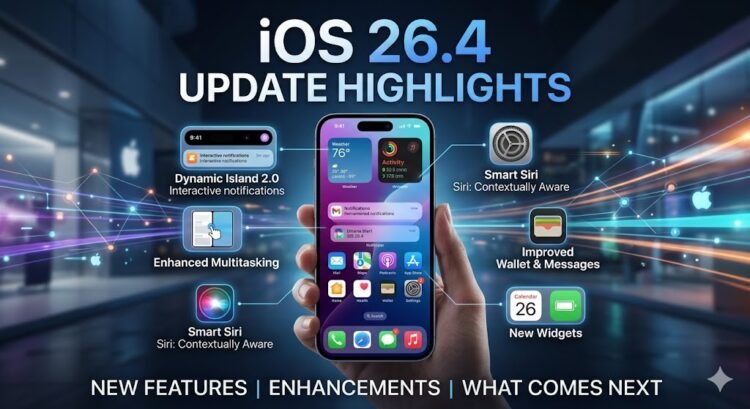



Digimagaz.com – Apple’s latest iPhone software update, iOS 26.4, may not look like a dramatic redesign on the surface, but it reflects a deeper shift in how the company is evolving its ecosystem. Rather than focusing on visual overhauls, this release emphasizes personalization, accessibility, and early groundwork for more advanced AI-driven features expected later this year.
Here’s a closer look at what makes iOS 26.4 more meaningful than it first appears.
A More Intelligent Apple Music Experience
The biggest changes in iOS 26.4 are centered around Apple Music, which continues to evolve into a more context-aware and personalized platform.
The introduction of Playlist Playground (beta) stands out as a notable step toward AI-assisted curation. Users can now describe the type of playlist they want, and the system generates a complete set—title, description, and song list included. This signals Apple’s growing interest in natural-language interfaces, a trend already dominating competing platforms.
Another addition, Concerts, turns Apple Music into a discovery hub for live events. By analyzing listening habits, it surfaces nearby performances and recommends artists you might not yet follow. This bridges the gap between streaming and real-world experiences, an area where music services are increasingly competing.
Meanwhile, Offline Music Recognition expands functionality beyond connectivity limits. Users can identify songs even without an internet connection, with results delivered once the device reconnects. It’s a small but practical upgrade that enhances everyday usability.
Apple also adds an Ambient Music widget, allowing users to quickly access curated playlists for sleep, focus, or relaxation directly from the Home Screen. Combined with new full-screen visuals for albums and playlists, the experience feels more immersive without being overwhelming.
Accessibility Gets a Practical Upgrade
Apple continues to prioritize inclusivity, and iOS 26.4 introduces several thoughtful improvements in this area.
New settings aim to reduce visual discomfort, including options to minimize bright flashes and better control motion effects across the interface. These refinements are especially relevant for users sensitive to rapid animations or intense visual transitions.
Additionally, subtitle and caption controls are now easier to access and customize during media playback. Instead of digging through menus, users can adjust settings directly from a dedicated icon, improving both convenience and usability.
Small Features That Improve Daily Use
Beyond headline features, iOS 26.4 introduces a range of smaller enhancements that collectively make the iPhone experience smoother.
- Improved keyboard accuracy helps reduce typing errors, particularly when typing quickly
- Reminders upgrades allow tasks to be marked as urgent and filtered more effectively
- Purchase Sharing changes give family members more flexibility by letting them use their own payment methods
- Freeform enhancements expand creative capabilities with advanced image tools and a premium content library via Apple Creator Studio
Apple also adds eight new emoji, including a ballet dancer, orca, and trombone, continuing its regular updates to digital expression.
A Strategic Step Toward AI Integration
While iOS 26.4 itself doesn’t heavily market artificial intelligence, its direction is clear. Features like Playlist Playground hint at a broader shift toward AI-powered personalization.
This aligns with Apple’s reported partnership with Google to integrate Gemini models into future updates. The groundwork laid here suggests that upcoming releases—likely starting with iOS 26.5—could introduce more advanced “Apple Intelligence” capabilities.
Looking further ahead, WWDC 2026 is expected to serve as the launchpad for iOS 27, where Apple may fully showcase its next-generation AI strategy.
The Bigger Picture
iOS 26.4 is less about immediate impact and more about direction. Apple is quietly refining how users interact with their devices—making features smarter, more adaptive, and more accessible without forcing major changes in behavior.
For users, this translates into an experience that feels familiar but works better in subtle ways. For Apple, it represents a careful transition toward a future where AI plays a central role, delivered in the company’s typically measured style.
In short, iOS 26.4 may not grab headlines, but it sets the stage for what comes next—and that could be far more significant.