
Table of contents:
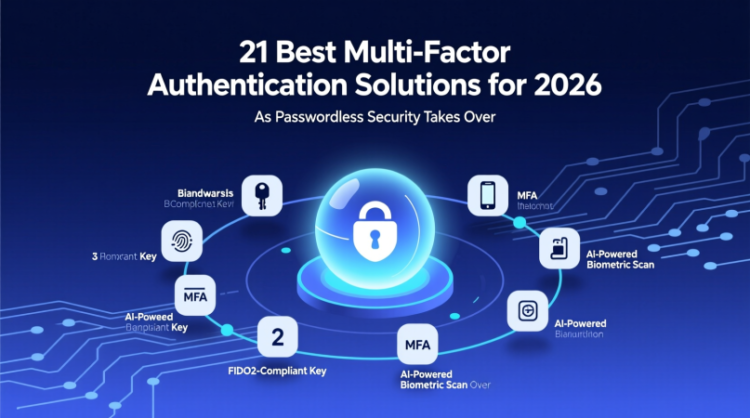
Digimagaz.com – Multi-factor authentication in 2026 looks very different from what it was just a few years ago. Passwords and SMS codes are steadily disappearing, replaced by phishing-resistant technologies built around cryptography, biometrics, and real-time risk analysis. As cybercriminals leverage AI, deepfakes, and social engineering at scale, MFA providers are responding with stronger identity verification models that reduce user friction without sacrificing security.
Below is a curated list of the best MFA solutions for 2026, organized by use case and security approach. Rather than focusing only on features, this list reflects how these tools are being used in real-world environments today.
Top Enterprise and Workforce MFA Platforms
These solutions are designed for organizations that need deep system integration, centralized policy control, and advanced threat detection.
- Okta Adaptive MFA
Okta remains a dominant force in enterprise identity management. Its adaptive MFA evaluates contextual signals such as device health, user behavior, and location to determine when additional verification is needed. This reduces unnecessary prompts while stopping high-risk login attempts. - Microsoft Entra ID (formerly Azure AD)
Microsoft Entra ID is the natural choice for organizations running Microsoft 365 and Windows environments. Built-in support for Windows Hello, passkeys, and device-based authentication makes it one of the most seamless MFA platforms for hybrid workforces. - Cisco Duo
Cisco Duo continues to stand out for its user-friendly design. Its verified push mechanism addresses MFA fatigue by requiring users to confirm a code shown on the login screen, making accidental approvals far less likely. - Ping Identity
Ping Identity is widely used in regulated industries such as finance and healthcare. It supports complex identity federation and fine-grained access policies, making it suitable for organizations with strict compliance requirements. - IBM Security Verify
IBM’s MFA platform focuses heavily on risk-based authentication. It often operates silently in the background, triggering MFA challenges only when user behavior deviates from established patterns. - RSA SecurID
Once known primarily for hardware tokens, RSA has modernized its platform with AI-driven risk analysis and flexible authentication options that combine physical and digital factors. - OneLogin by One Identity
OneLogin offers strong access management with faster deployment than many enterprise competitors. It is often chosen by mid-sized organizations transitioning to centralized identity systems. - ForgeRock (Ping Group)
ForgeRock specializes in highly customizable authentication flows. Its modular approach allows organizations to design tailored identity journeys across web, mobile, and IoT environments.
Passwordless and Developer-Focused MFA Solutions
These platforms are built for modern applications that aim to eliminate passwords entirely using passkeys, biometrics, and APIs.
- Auth0 by Okta
Auth0 is widely used by developers building custom authentication systems. Its workflow-based logic allows MFA enforcement to adapt dynamically based on user context. - MojoAuth
MojoAuth has gained attention for its no-code passwordless setup. It supports magic links, email OTPs, biometrics, and passkeys, making it popular for B2C applications. - Descope
Descope simplifies passwordless implementation through visual tools and pre-built flows. Developers can deploy passkey-based authentication in minutes rather than weeks. - Beyond Identity
Beyond Identity removes passwords altogether by binding cryptographic certificates to trusted devices. Because there are no shared secrets, phishing attacks become ineffective. - 1Kosmos BlockID
This platform combines live biometrics with decentralized identity concepts. Its focus on verifying real human presence makes it suitable for high-assurance identity use cases. - Transmit Security
Transmit Security merges authentication with fraud prevention. Its biometric-based login experience is designed to reduce friction while monitoring identity risk continuously.
Hardware-Based and High-Assurance Security Keys
Physical security keys remain the most effective defense against phishing and remote credential theft.
- Yubico YubiKey Series
YubiKeys continue to be the industry standard for hardware-backed MFA. Biometric models allow fingerprint verification directly on the key, eliminating PIN-based weaknesses. - Google Titan Security Key
Google’s Titan keys are affordable and durable. They are widely used in Google’s Advanced Protection Program and support modern FIDO2 standards. - Nitrokey
Nitrokey is favored by privacy advocates and government organizations. Its open-source firmware allows independent security audits and greater transparency. - Thetis FIDO2 Key
Thetis offers cost-effective hardware keys for small businesses that want strong security without enterprise-level pricing.
Consumer and Personal MFA Apps
These tools are best suited for individuals, freelancers, and small teams managing multiple online accounts.
- Sentinel Authenticator
Sentinel is emerging as a privacy-first alternative to mainstream authenticator apps. It offers encrypted cloud backups without exposing recovery data. - Authy
Authy remains popular due to its multi-device synchronization and desktop support. It is often used by users managing large numbers of 2FA-enabled accounts. - Microsoft Authenticator
Microsoft Authenticator stands out for its phone-based sign-in feature, which turns a smartphone into a secure login device for Microsoft accounts.
Key MFA Trends Defining 2026
Several trends are shaping MFA adoption across industries. SMS-based authentication is being phased out due to SIM-swapping risks. Passkeys are becoming the default for major platforms, reducing reliance on one-time codes. At the same time, AI is being used both to launch attacks and to detect them, forcing MFA providers to continuously adapt.
Choosing the right MFA solution in 2026 is less about adding more steps and more about applying the right level of verification at the right moment. The most effective platforms are those that balance strong security with minimal disruption to users.